
Screw Drive Styles: A Complete Guide to Fastener Drive Systems
Introduction
The drive style of a fastener refers to the feature that engages with the installation tool to tighten or loosen the fastener. It determines the type of screwdriver, bit, or wrench required, and significantly influences the amount of torque that can be applied, resistance to cam-out, installation speed, and tamper resistance.
Over the years, numerous drive systems have been developed to improve fastening performance across industries such as construction, automotive, aerospace, electronics, machinery, furniture, and security equipment.
This guide explains the most common screw drive styles, their advantages, limitations, typical applications, and the tools required for installation.
Note: A drive style is different from a fastener head style. For example, a screw may have a Pan Head with a Phillips Drive, or a Button Head with a Hex Socket Drive.
Common Screw Drive Styles
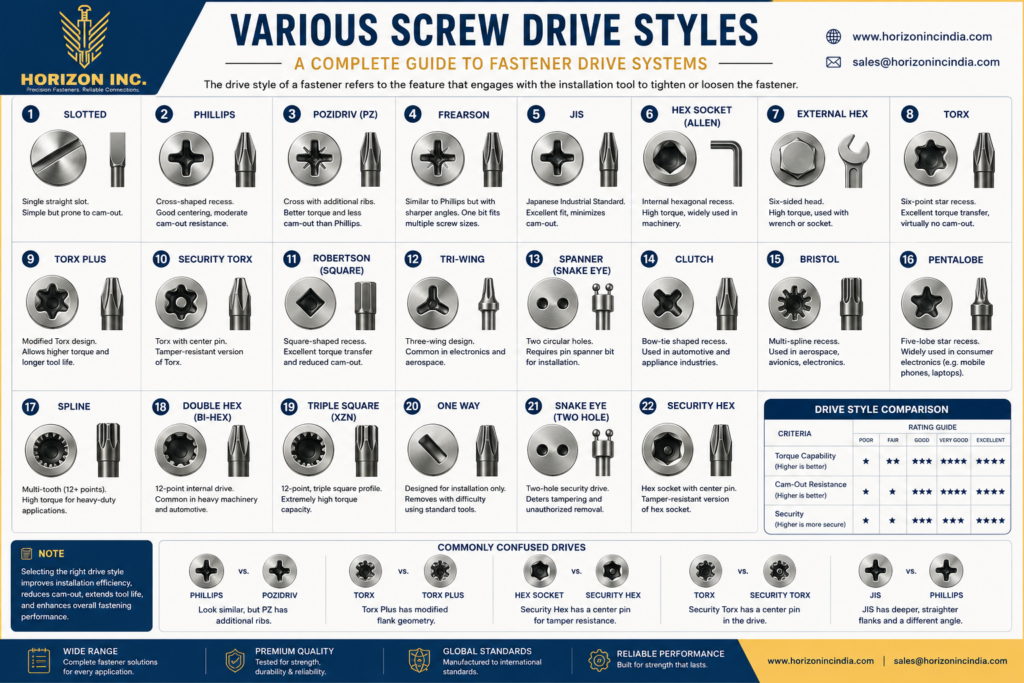
1. Slotted
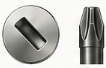
The slotted drive is the oldest and simplest screw drive design, featuring a single straight slot across the head. Although easy to manufacture, it offers limited torque transmission and is prone to screwdriver slippage.
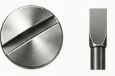
Tool Required: Flat Blade Screwdriver
Torque Capability: ★☆☆☆☆
Cam-Out Resistance: Poor
Typical Applications
- Electrical terminals
- Decorative hardware
- Restoration work
- Light-duty assemblies
Advantages
- Simple design
- Low manufacturing cost
- Easily available tools
Disadvantages
- Poor centering
- High cam-out tendency
- Slow installation
2. Phillips
The Phillips drive features a cross-shaped recess designed to improve tool centering and installation speed compared to slotted screws. It remains one of the most widely used drive systems worldwide.
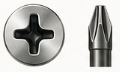
Tool Required: Phillips Screwdriver
Torque Capability: ★★★☆☆
Cam-Out Resistance: Moderate (designed to cam out under excessive torque)
Typical Applications
- Electronics
- Appliances
- Sheet metal
- General-purpose screws
Advantages
- Self-centering
- Widely available
- Fast installation
Disadvantages
- Cam-out under high torque
- Bit wear over time
3. Pozidriv (PZ)
Pozidriv is an improved version of the Phillips drive with additional ribs that provide better torque transmission and reduced cam-out.
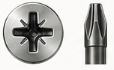
Tool Required: Pozidriv Bit
Torque Capability: ★★★★☆
Cam-Out Resistance: Good
Typical Applications
- Furniture
- Wood screws
- Construction
- European fasteners
Advantages
- Higher torque
- Reduced slippage
- Longer bit life
Disadvantages
- Requires dedicated PZ bit
- Often confused with Phillips
4. Frearson
Also known as the Reed & Prince drive, the Frearson drive resembles Phillips but has a sharper cross profile that allows one bit to fit multiple screw sizes.
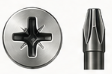
5. JIS (Japanese Industrial Standard)
Designed specifically for Japanese-manufactured equipment, the JIS drive provides excellent engagement and minimizes cam-out when used with the correct driver.
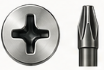
6. Hex Socket (Allen)
The Hex Socket drive features an internal hexagonal recess that allows high torque transmission and is commonly used in precision machinery and industrial equipment.
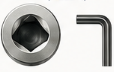
Tool Required: Allen Key / Hex Key
Torque Capability: ★★★★★
Cam-Out Resistance: Excellent
7. External Hex
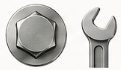
The external hex drive uses the outside of the hexagonal head for tightening with a wrench or socket, making it ideal for high-strength applications.
8. Torx
Torx uses a six-point star-shaped recess designed to maximize torque transmission while virtually eliminating cam-out.
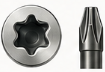
Tool Required: Torx Bit
Torque Capability: ★★★★★
Cam-Out Resistance: Excellent
9. Torx Plus
An enhanced version of Torx featuring a modified geometry that allows even greater torque transmission and reduced stress on the tool.
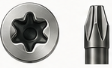
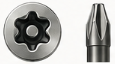
10. Security Torx
Similar to Torx but with a central pin that prevents the use of standard Torx bits.
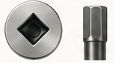
11. Robertson (Square)
A square-shaped recess that provides excellent tool engagement and one-handed installation.
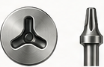
12. Tri-Wing
A three-wing security drive commonly used in electronics and aerospace equipment.
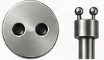
13. Spanner (Snake Eye)
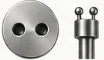
A tamper-resistant drive featuring two small holes requiring a dedicated spanner bit.
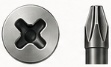
14. Clutch
A bow-tie shaped recess historically used in automotive and recreational vehicle applications.
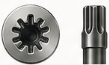
15. Bristol
A multi-spline internal drive commonly used in avionics, electronics, and precision instruments.
16. Pentalobe
A five-point star drive widely used in consumer electronics to discourage unauthorized repairs.
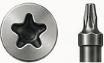
17. Spline
A multi-tooth drive providing very high torque capacity for heavy-duty industrial applications.
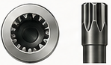
18. Double Hex (Bi-Hex)
A twelve-point internal drive commonly found in heavy machinery and automotive applications.
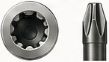
19. Triple Square (XZN)
A twelve-point drive offering extremely high torque transmission, widely used in European automotive manufacturing.
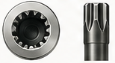
20. One Way
A tamper-resistant drive designed for installation only, making removal difficult without specialized methods.
21. Snake Eye
Also known as a two-hole security drive, frequently used in public installations to discourage tampering.
22. Security Hex
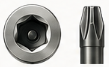
A Hex Socket drive with a central security pin requiring a tamper-resistant hex key.
Drive Style Comparison
| Drive Style | Torque | Cam-Out Resistance | Security | Common Industries |
|---|---|---|---|---|
| Slotted | ★☆☆☆☆ | ★☆☆☆☆ | ☆☆☆☆☆ | General |
| Phillips | ★★★☆☆ | ★★☆☆☆ | ☆☆☆☆☆ | General Manufacturing |
| Pozidriv | ★★★★☆ | ★★★★☆ | ☆☆☆☆☆ | Construction |
| Hex Socket | ★★★★★ | ★★★★★ | ★★☆☆☆ | Machinery |
| External Hex | ★★★★★ | ★★★★★ | ★☆☆☆☆ | Structural |
| Torx | ★★★★★ | ★★★★★ | ★☆☆☆☆ | Automotive |
| Torx Plus | ★★★★★ | ★★★★★ | ★★☆☆☆ | Aerospace |
| Robertson | ★★★★☆ | ★★★★★ | ★☆☆☆☆ | Woodworking |
| Triple Square | ★★★★★ | ★★★★★ | ★★★☆☆ | Automotive |
| Security Torx | ★★★★☆ | ★★★★★ | ★★★★★ | Public Equipment |
| One Way | ★☆☆☆☆ | ★★★☆☆ | ★★★★★ | Security Installations |
Choosing the Right Drive Style
The ideal drive style depends on the application, installation method, required torque, and security requirements.
- High Torque: Hex Socket, Torx, External Hex, Triple Square
- General Assembly: Phillips, Pozidriv
- Furniture & Woodworking: Pozidriv, Robertson
- Precision Machinery: Hex Socket, Torx
- Tamper Resistance: Security Torx, Security Hex, One Way, Snake Eye
- Consumer Electronics: Torx, Pentalobe, Tri-Wing
Head Style vs. Drive Style
A fastener’s head style defines its external shape, while the drive style defines how it is tightened.
| Head Style | Drive Style |
|---|---|
| Pan Head | Phillips |
| Button Head | Hex Socket |
| Countersunk Head | Torx |
| Hex Head | External Hex |
Together, the head style and drive style determine the fastener’s performance, ease of installation, and suitability for specific applications.
Frequently Asked Questions
What is the strongest screw drive?
Hex Socket, Torx, External Hex, and Triple Square drives offer the highest torque transmission and excellent resistance to cam-out.
Why is Torx preferred over Phillips?
Torx provides greater torque capacity, minimizes cam-out, reduces bit wear, and improves installation efficiency.
Can a Phillips screwdriver be used on a Pozidriv screw?
Although it may fit, using a Phillips screwdriver on a Pozidriv screw can damage both the screw recess and the screwdriver. Always use the correct PZ bit.
What are security drive styles used for?
Security drives are designed to discourage unauthorized removal and are commonly used in public infrastructure, electronics, security equipment, and vandal-resistant installations.
Related Resources
Fastener Head Styles Explained
DIN & ISO Standards for Fasteners
Types of Machine Screws
Types of Bolts
Types of Blind Rivets
Types of Nut Inserts
Fastener Materials and Mechanical Properties
Fastener Coatings and Surface Finishes