Fastener Nomenclature and Designation System Explained
1. Introduction
Fastener nomenclature is the standardized method used to identify and specify bolts, screws, nuts, washers, studs, and other fastening elements. International standards such as DIN, ISO, and EN establish uniform designation systems that allow engineers, purchasers, manufacturers, and quality control personnel to accurately identify fasteners and ensure interchangeability across global markets.
A complete fastener designation typically includes information such as the product standard, thread size, length, material grade, mechanical property class, surface finish, and any special characteristics. Proper use of standardized nomenclature helps prevent procurement errors, improves communication between suppliers and customers, and ensures compliance with engineering specifications.
This technical guide explains the basic principles of fastener nomenclature and how to interpret common fastener designations according to DIN and ISO standards.
2. Principle of Standard Designation
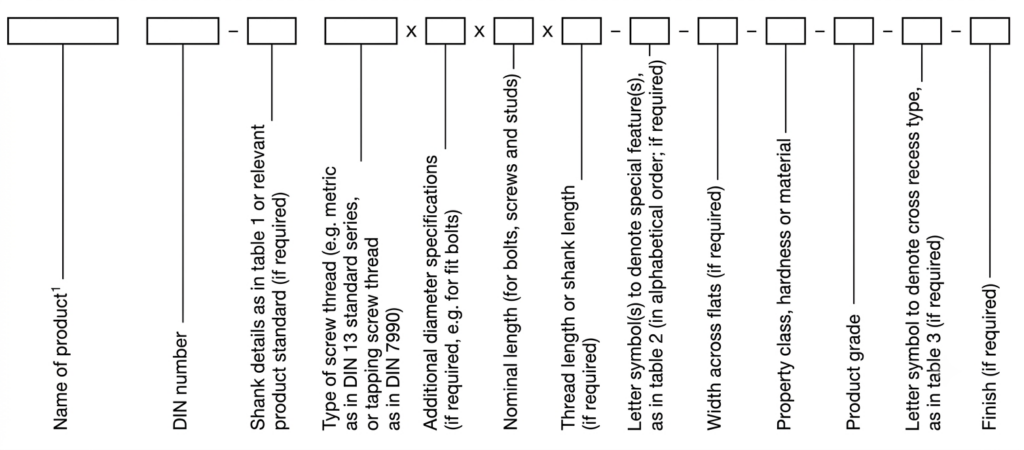
Figure 1. General structure of a standardized fastener designation according to DIN 962.
A standard fastener designation may consist of the following elements:
| Position | Designation Element | Example |
|---|---|---|
| 1 | Name of product | Hexagon bolt |
| 2 | Standard number | DIN 933 |
| 3 | Product form/style | A |
| 4 | Thread designation | M10 |
| 5 | Additional diameter specification | 1.25 (to convey fine pitch) |
| 6 | Nominal length | 50 |
| 7 | Threaded length | 26 |
| 8 | Special features | LH (to say convey left hand thread) |
| 9 | Width across flats | SW17 |
| 10 | Property class/material | 8.8 |
| 11 | Product grade | A |
| 12 | Recess type | PH |
| 13 | Surface finish | Zn |
3. Breaking Down Each Element
3.1 Product Name
Examples:
- Hexagon bolt
- Socket head cap screw
- Pan head screw
- Hex nut
- Plain washer
- Blind rivet
3.2 Standard Number
Examples:
| Old Standard | Current Equivalent |
|---|---|
| DIN 933 | ISO 4017 |
| DIN 931 | ISO 4014 |
| DIN 934 | ISO 4032 |
| DIN 125 | ISO 7089 |
3.3 Thread Designation
| Designation | Meaning |
|---|---|
| M6 | 6 mm metric thread |
| M10 | 10 mm metric thread |
| M12×1.5 | Fine pitch metric thread |
| UNC 1/4 | Unified coarse thread |
| UNF 3/8 | Unified fine thread |
3.4 Nominal Length
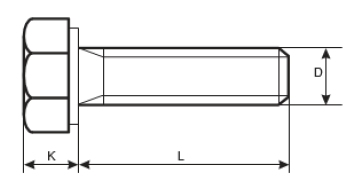
The thread length is measured from under the head of the bolt till the chamfered end.
3.5 Property Class
| Class | Tensile Strength |
|---|---|
| 4.6 | 400 MPa |
| 5.8 | 500 MPa |
| 8.8 | 800 MPa |
| 10.9 | 1000 MPa |
| 12.9 | 1200 MPa |
3.6 Product Grade
| Grade | Tolerance |
|---|---|
| A | Precision |
| B | Standard |
| C | Coarse |
3.7 Surface Finish
| Code | Finish |
|---|---|
| Zn | Zinc plated |
| HDG | Hot dip galvanized |
| Geomet | Zinc flake coating |
| Black | Black oxide |
| Plain | Uncoated |
4. Practical Examples
Example 1
Hexagon Bolt DIN 933 M10×50-8.8-Zn
| Element | Meaning |
|---|---|
| Hexagon Bolt | Product |
| DIN 933 | Standard |
| M10 | Thread diameter |
| 50 | Length |
| 8.8 | Property class |
| Zn | Zinc plated |
Example 2
Hex Nut DIN 934 M12-10
| Element | Meaning |
|---|---|
| Hex Nut | Product |
| DIN 934 | Standard |
| M12 | Thread |
| 10 | Property class |
Example 3
Socket Head Cap Screw ISO 4762 M8×40-12.9
| Element | Meaning |
|---|---|
| ISO 4762 | Standard |
| M8 | Thread |
| 40 | Length |
| 12.9 | Property class |
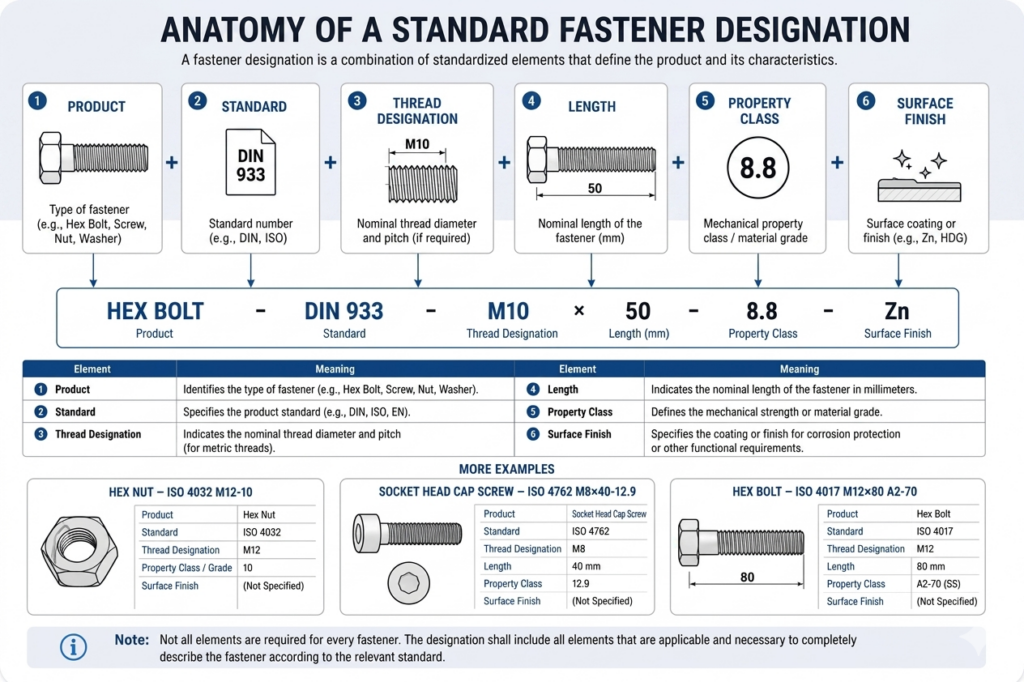
5. Simplified Fastener Designation Formula
6. Frequently Asked Questions
What is fastener nomenclature?
Fastener nomenclature is the standardized method used to identify and specify fasteners such as bolts, screws, nuts, washers, and studs. It typically includes the product type, applicable standard, thread size, length, material grade, mechanical property class, and surface finish.
Why is standardized fastener designation important?
Standardized fastener designation eliminates ambiguity, ensures interchangeability between manufacturers, simplifies procurement, and helps maintain compliance with engineering and quality standards.
What does the designation M10×50 mean?
The designation M10×50 indicates a metric fastener with a nominal thread diameter of 10 mm and a nominal length of 50 mm. If the thread pitch is omitted, the standard coarse pitch is generally assumed.
What does property class 8.8 mean on a bolt?
Property class 8.8 identifies the mechanical strength of a carbon steel fastener. The first number multiplied by 100 gives the nominal tensile strength (800 MPa), while the product of both numbers multiplied by 10 gives the approximate yield strength (640 MPa).
What does A2-70 mean on stainless steel fasteners?
A2-70 refers to an austenitic stainless steel fastener. A2 generally corresponds to stainless steel grade 304, while 70 indicates a minimum tensile strength of 700 MPa.
What does Zn mean in a fastener designation?
Zn indicates that the fastener has a zinc-plated surface finish, which provides corrosion protection and improved appearance.
What is the difference between DIN and ISO fastener standards?
DIN standards originated from the German Institute for Standardization, while ISO standards are international standards developed by the International Organization for Standardization. Many traditional DIN fastener standards have been replaced by equivalent ISO standards.
How are fastener lengths measured?
Fastener length measurement depends on the fastener type. For example, hex bolts are measured from the bearing surface under the head to the end of the fastener, while countersunk screws are measured including the head.
What is the difference between coarse and fine thread designations?
Coarse threads use a larger thread pitch and are suitable for general applications, while fine threads have a smaller pitch and provide greater adjustment accuracy, higher tensile stress area, and improved resistance to loosening.
Are all elements of a fastener designation always required?
No. The elements included in a fastener designation depend on the specific product standard and application requirements. However, critical characteristics such as thread size, length, material or property class, and surface finish should be specified whenever applicable.
How do I identify the correct standard for a fastener?
The applicable standard is usually specified in engineering drawings, customer specifications, or industry standards. Common examples include DIN 933 / ISO 4017 for hex bolts, DIN 934 / ISO 4032 for hex nuts, and DIN 125 / ISO 7089 for plain washers.
Why are some older DIN fastener standards still widely used?
Although many DIN standards have been superseded by ISO standards, the original DIN designations remain deeply embedded in engineering drawings, procurement systems, catalogs, and industry terminology, and therefore continue to be widely used throughout the world.