
Nut Inserts Technical Datasheets
This technical datasheet library covers various types of nut inserts including round , semi hex an full hex body in large and reduced flange and open and closed end. Browse the individual datasheets below to access detailed engineering information, drawings, technical specifications, and downloadable product documentation.
Table of Contents
View Datasheets
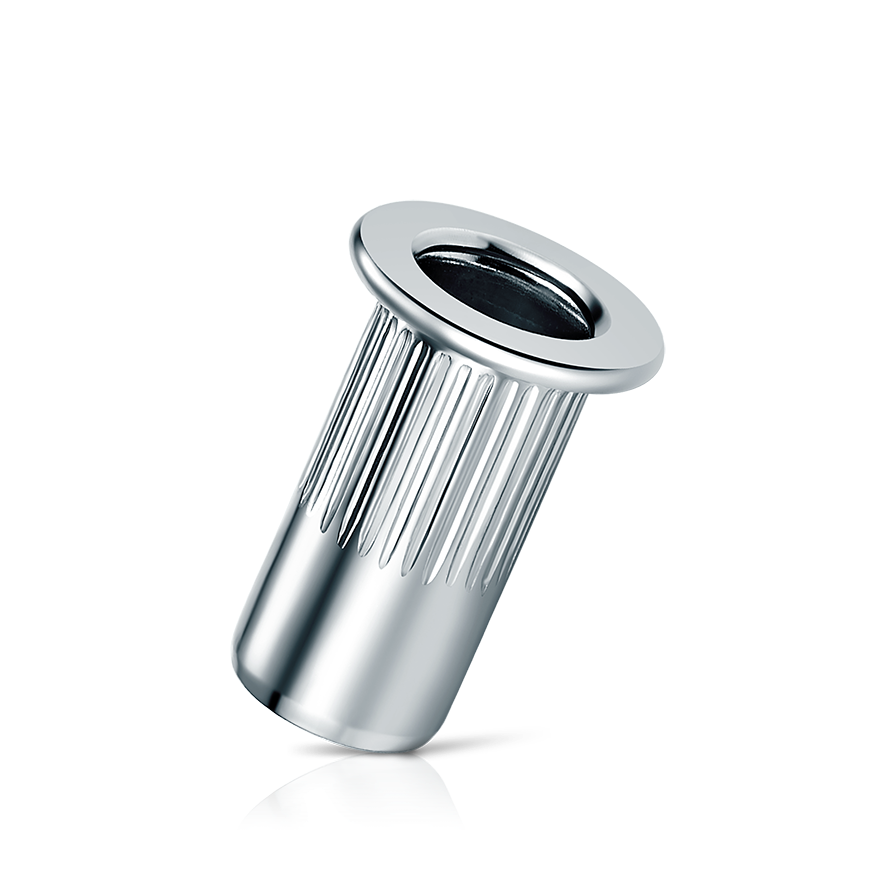
Round Body
Large Flange
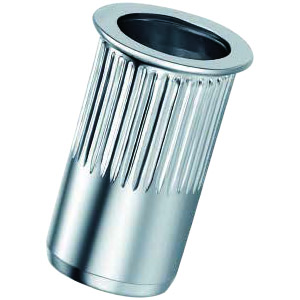
Round Body
Reduced Flange

Round Body
CSK
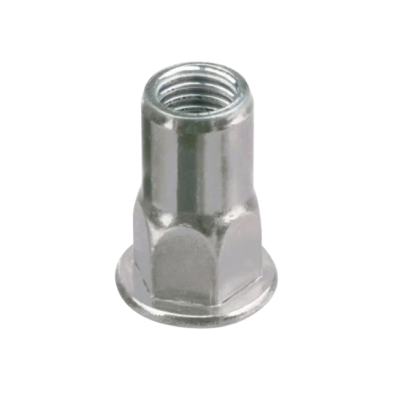
Semi Hex
Large Flange
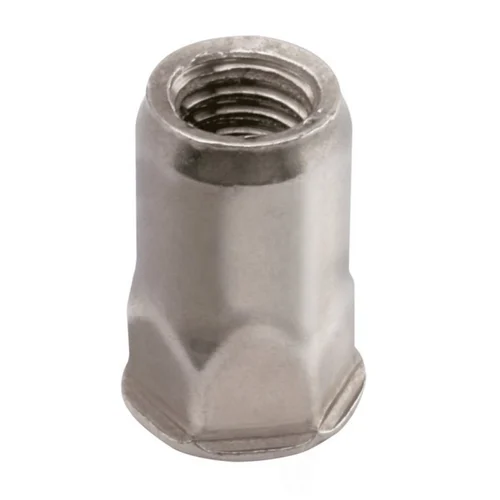
Semi Hex
Reduced Flange
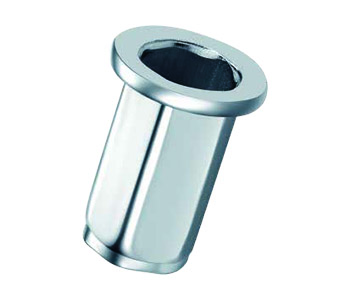
Full Hex
Large Flange
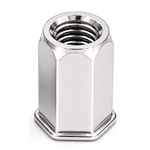
Full Hex
Reduced Flange
About Nut Inserts
Nut inserts, commonly known as Rivet Nuts, Blind Rivet Nuts, or Threaded Inserts, provide strong reusable internal threads in thin sheets, hollow sections, tubes, and other materials where conventional tapping is not practical.
Installed from one side of the workpiece, nut inserts eliminate the need for access to the rear of the assembly while providing reliable load-bearing threads for repeated assembly and maintenance.
They are widely used across sheet metal fabrication, electrical enclosures, automotive components, railways, HVAC equipment, furniture, agricultural machinery, electronics, and general manufacturing.
Why Use Nut Inserts?
Unlike tapped holes, nut inserts provide durable machine threads in thin materials without welding or backside access.
Benefits include:
Available in corrosion-resistant materials
Strong permanent internal threads
Installation from one side only
Suitable for thin sheet materials
Allows repeated assembly and disassembly
No distortion caused by welding
Suitable for painted or coated parts
Fast installation
Materials Available
| Material | Advantages | Typical Applications |
|---|---|---|
| Steel Zinc Plated | High strength and economical | General engineering |
| Stainless Steel 304 | Excellent corrosion resistance | Food processing, electronics |
| Stainless Steel 316 | Superior marine corrosion resistance | Offshore, marine |
| Aluminium | Lightweight | Automotive, aerospace, electronics |
Installation Do’s and Don’ts
✅ Do
- Select the correct nut insert type (Round Body, Hex Body, Half-Hex, Closed-End, etc.) for your application.
- Drill the hole to the recommended diameter with the specified tolerance.
- Deburr and clean the hole before installation.
- Use a calibrated rivet nut installation tool with the correct mandrel and nosepiece.
- Install the insert perpendicular (90°) to the sheet surface.
- Ensure the material thickness falls within the specified grip range.
- Verify the insert is fully collapsed and seated flush against the parent material.
- Use the recommended tightening torque for the mating screw.
- Inspect installed inserts periodically in high-vibration applications.
❌ Don’t
- Don’t use oversized or irregular holes.
- Don’t install inserts into sheet material thinner than the specified grip range.
- Don’t over-compress the insert during installation.
- Don’t reuse damaged or partially installed inserts.
- Don’t overtighten screws beyond the recommended torque.
- Don’t use round-body inserts where high anti-rotation performance is required if a hex-body insert is available.
- Don’t ignore corrosion compatibility between the insert and the parent material.
- Don’t install inserts too close to the sheet edge unless permitted by the manufacturer’s recommendations.
Common Problems & Troubleshooting
| Problem | Possible Cause | Recommended Solution |
|---|---|---|
| Nut insert spins when tightening screw | Hole diameter too large or insert not fully collapsed | Verify hole size and install using the correct setting force. Consider a hex-body insert if higher torque resistance is needed. |
| Insert pulls out of the sheet | Incorrect grip range or sheet material too thin | Select an insert suitable for the material thickness and verify pull-out requirements. |
| Insert sits proud of the surface | Incomplete installation stroke or burrs around the hole | Remove burrs and ensure the installation tool completes the full stroke. |
| Thread strips during assembly | Excessive tightening torque or incorrect screw | Use the specified tightening torque and the correct screw grade. |
| Parent material cracks | Hole too close to the edge or excessive installation force | Increase edge distance and use the correct installation force. |
| Screw will not thread smoothly | Damaged internal thread or contamination | Inspect threads and replace damaged inserts if necessary. |
| Insert rotates after repeated service | Joint subjected to vibration beyond insert capability | Consider hex-body, splined, or structural inserts, or add thread-locking where appropriate. |
| Corrosion around insert | Dissimilar metals or unsuitable plating | Select compatible materials or corrosion-resistant finishes appropriate for the environment. |
Which Nut Insert Should You Choose?
| Requirement | Recommended Nut Insert |
|---|---|
| General sheet metal | Round Body Open-End |
| High torque resistance | Hex Body |
| Waterproof / sealed assemblies | Closed-End |
| Thin sheet materials | Thin Sheet Nut Insert |
| Stainless steel applications | Stainless Steel Nut Insert |
| Aluminium structures | Aluminium Nut Insert |
| High vibration | Hex Body |
| Decorative or flush finish | Countersunk Head Nut Insert |
| Soft materials | Large Flange Nut Insert |
Before You Select a Nut Insert
✔ Material thickness
✔ Parent material (Steel, Stainless Steel, Aluminium, Plastic)
✔ Hole diameter
✔ Required thread size
✔ Required pull-out strength
✔ Required torque-out resistance
✔ Open-End or Closed-End
✔ Round Body or Hex Body
✔ Installation method (Hand Tool, Pneumatic, Hydraulic)
✔ Corrosion environment
Frequently Asked Questions
What is a nut insert?
A nut insert is a blind-installed threaded fastener that creates permanent internal threads in thin materials without requiring access to the opposite side.
What is the difference between a rivet nut and a nut insert?
There is no functional difference. “Rivet nut” and “nut insert” are commonly used interchangeably in industry.
Can nut inserts be installed after painting?
Yes. Since installation is performed mechanically, nut inserts can often be installed after painting or coating, provided the hole dimensions remain within specification.
What materials are available?
Typical materials include zinc-plated steel, stainless steel (A2/304 and A4/316), and aluminium.
How do I choose the correct grip range?
Select a grip range that matches the total thickness of the material being fastened. Using the correct grip range ensures proper deformation and maximum performance.
Can nut inserts be used in stainless steel sheets?
Yes. Proper hole preparation and the correct installation force are essential for reliable installation in stainless steel sheets.
Are metric and UNC threads available?
Yes. Nut inserts are available in both metric and imperial thread sizes depending on application requirements.