
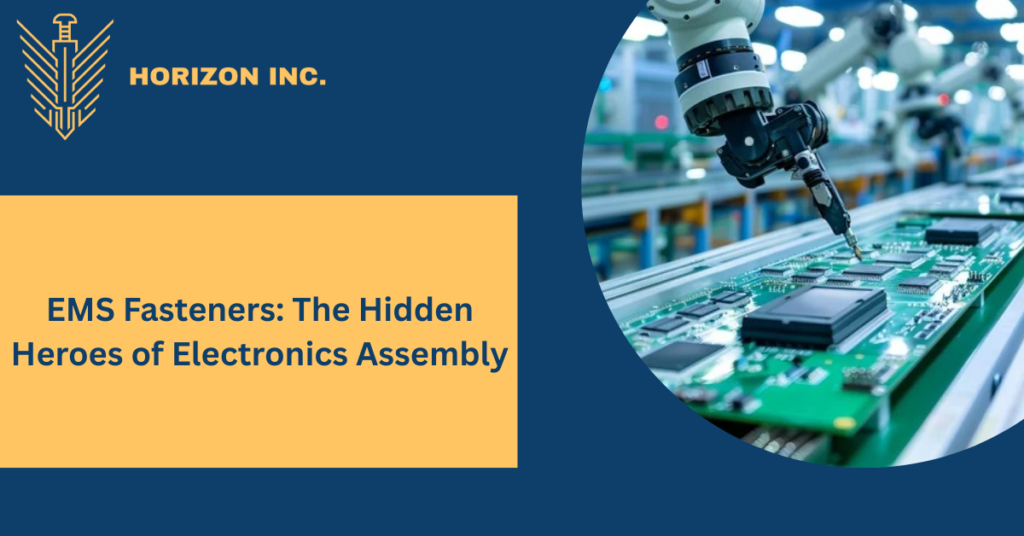
Electronics manufacturers use a variety of specialised fasteners to assemble printed circuit boards (PCBs), electronic enclosures, telecom equipment, industrial controllers, EV chargers, medical devices, and consumer electronics. The most common fasteners include machine screws, PCB standoffs, spacers, self-clinching nuts, self-clinching studs, captive screws, rivet nuts, insulating washers, and cable management hardware.
The correct fastener improves assembly reliability, vibration resistance, electrical safety, thermal management, and serviceability. In modern electronics manufacturing, self-clinching fasteners and PCB standoffs are widely preferred because they provide strong threads in thin sheet metal without welding or tapping. Selecting the right fastener depends on factors such as enclosure material, PCB mounting requirements, maintenance access, vibration exposure, and production volume.
Key Takeaways
- Fasteners provide mechanical stability to electronic assemblies.
- PCB standoffs prevent electrical shorts and improve airflow.
- Self-clinching fasteners create durable threads in thin sheet metal.
- Captive screws simplify servicing and prevent hardware loss.
- Stainless steel, brass, aluminium, and nylon are commonly used materials.
- Correct fastener selection reduces assembly time and field failures.
- Electronics manufacturers increasingly use self-clinching hardware to eliminate loose nuts and washers.
Introduction
When discussing electronics manufacturing, most attention is given to semiconductors, PCBs, processors, and software. However, every electronic device depends on mechanical fastening systems to hold components securely together.
Whether it is a telecom cabinet, industrial control panel, EV charger, server rack, medical device, or consumer electronic product, fasteners play a critical role in assembly integrity and long-term reliability.
At Horizon Inc., we supply fastening solutions used by electronics manufacturers, control panel builders, telecom equipment manufacturers, EV charging equipment producers, and industrial OEMs across India.
What Functions Do Fasteners Perform in Electronics Assemblies?
Fasteners in electronic products perform several important functions:
- PCB mounting
- Enclosure assembly
- Grounding connections
- Component positioning
- Cable management
- Heat sink attachment
- Access panel retention
- Vibration resistance
Without proper fastening, electronic assemblies may experience:
- PCB cracking
- Loose components
- Connector failures
- Vibration-related issues
- Serviceability problems
- Electrical short circuits
What Types of Fasteners Are Commonly Used in Electronics Manufacturing?
| Fastener Type | Primary Function | Common Applications |
|---|---|---|
| Machine Screws | General assembly | Enclosures, covers, PCBs |
| PCB Standoffs | Board spacing | PCB mounting |
| Self-Clinching Nuts | Permanent threads | Sheet metal enclosures |
| Self-Clinching Studs | Permanent mounting points | Chassis assembly |
| Captive Screws | Service access panels | Server racks, cabinets |
| Rivet Nuts | Blind-side threads | Electronic housings |
| Spacers | Separation and alignment | PCB stacks |
| Nylon Washers | Electrical insulation | Electronic assemblies |
| Cable Mounts | Wire management | Control panels |
Why Are PCB Standoffs Important?
PCB standoffs create controlled spacing between a circuit board and the enclosure.
Benefits include:
- Prevention of electrical shorts
- Improved airflow
- Better heat dissipation
- Easier cable routing
- Reduced mechanical stress on PCB assemblies
Common materials include:
- Brass
- Stainless steel
- Aluminium
- Nylon
Selection depends on electrical and environmental requirements.
Why Are Self-Clinching Fasteners Widely Used in Electronics Enclosures?
Electronic enclosures are frequently manufactured from thin sheet metal that cannot reliably support tapped threads.
Self-clinching fasteners solve this problem by creating permanent threads through a press-fit installation process. Once installed, they become an integral part of the enclosure.
Advantages include:
- Strong threads in thin sheet metal
- No welding required
- No loose hardware
- Faster assembly
- Improved serviceability
- High resistance to vibration
Common self-clinching products include:
- Self-clinching nuts
- Self-clinching studs
- Self-clinching standoffs
- Captive panel screws
- Locating pins
These fasteners are extensively used in telecom equipment, server cabinets, EV chargers, industrial electronics, and control panels.
What Materials Are Used for Electronics Fasteners?
| Material | Advantages | Typical Use |
| Stainless Steel | Corrosion resistance | Enclosures, outdoor electronics |
| Brass | Excellent conductivity | PCB hardware, grounding |
| Aluminium | Lightweight | Portable devices |
| Nylon | Electrical insulation | PCB mounting |
| Zinc-Plated Steel | Cost-effective | General enclosure assembly |
Material selection should consider:
- Corrosion exposure
- Electrical conductivity
- Weight
- Mechanical load
- Temperature range
How Do Captive Screws Improve Serviceability?
Captive screws remain attached to the panel even when loosened.
Advantages include:
- Prevent hardware loss
- Faster maintenance
- Improved field service operations
- Reduced inventory of replacement screws
Applications include:
- Data centre racks
- Telecom cabinets
- Industrial controllers
- Power distribution units
- Network switches
Which Fasteners Are Best for Thin Sheet Metal Electronics Enclosures?
| Requirement | Recommended Fastener |
| Permanent thread | Self-clinching nut |
| External mounting point | Self-clinching stud |
| PCB spacing | Self-clinching standoff |
| Removable access panel | Captive screw |
| Blind-side installation | Rivet nut |
| Electrical insulation | Nylon spacer |
This selection approach helps design engineers choose the correct hardware based on assembly requirements.
What Fastener Challenges Are Common in Electronics Manufacturing?
Based on Horizon Inc.’s experience supporting enclosure manufacturers and electronics OEMs, common issues include:
Insufficient Thread Engagement
Thin sheet metal often cannot support tapped threads.
Solution:
Use self-clinching nuts or rivet nuts.
Lost Panel Hardware
Loose screws are frequently misplaced during maintenance.
Solution:
Use captive panel screws.
PCB Damage During Assembly
Overtightening can crack circuit boards.
Solution:
Use controlled torque values and suitable spacers.
Electrical Short Circuits
Metal hardware may unintentionally contact conductive traces.
Solution:
Use insulating washers and nylon spacers.
Vibration Loosening
Industrial and telecom equipment experience vibration.
Solution:
Use locking hardware and self-clinching solutions.
Where Are Electronics Fasteners Used?
Electronics fasteners are commonly used in:
- EMS (Electronics Manufacturing Services)
- PCB assembly
- Telecom infrastructure
- Data centre equipment
- EV charging systems
- Medical equipment
- Industrial automation systems
- Consumer electronics
- Renewable energy electronics
- Network equipment
Frequently Asked Questions
What are electronics fasteners?
Electronics fasteners are specialised mechanical components used to secure PCBs, enclosures, connectors, heat sinks, and electronic assemblies.
Which fasteners are commonly used for PCB mounting?
PCB standoffs, machine screws, insulating washers, and spacers are commonly used.
Why are self-clinching fasteners used in electronics?
They create permanent threads in thin sheet metal without welding or tapping and improve assembly efficiency.
Are nylon fasteners suitable for electronics?
Yes. Nylon fasteners provide electrical insulation and corrosion resistance.
What is the difference between a spacer and a standoff?
A spacer provides separation between components, while a standoff typically includes threaded ends for fastening.
Which fasteners are used in telecom cabinets?
Self-clinching nuts, captive screws, standoffs, machine screws, and cable management hardware are commonly used.
Can rivet nuts be used in electronic enclosures?
Yes. Rivet nuts are widely used when access is available from only one side of the enclosure.
Conclusion
Electronic products rely on much more than circuit design and software. The mechanical fastening system directly affects reliability, manufacturability, maintenance, and long-term performance.
By selecting the correct combination of PCB standoffs, self-clinching fasteners, captive screws, spacers, and mounting hardware, manufacturers can reduce assembly costs, improve product reliability, and simplify servicing throughout the product lifecycle.
Horizon Inc. supplies fastening solutions for electronics manufacturers, telecom equipment builders, control panel manufacturers, EV charger OEMs, and industrial electronics companies across India.
📞 +91 9916777262
📧 sales@horizonincindia.com
🌐 www.horizonincindia.com

Yusuf T. Unjhawala is Co-founder of Horizon Inc., a supplier of industrial fasteners serving electrical control panel manufacturers, sheet metal fabricators, telecom equipment manufacturers, solar industry, HVAC, and industrial OEMs across South India.
Public Policy and Research:
Yusuf is an Adjunct Scholar at the Takshashila Institution, Bengaluru, where his work focuses on defence, strategic affairs.