
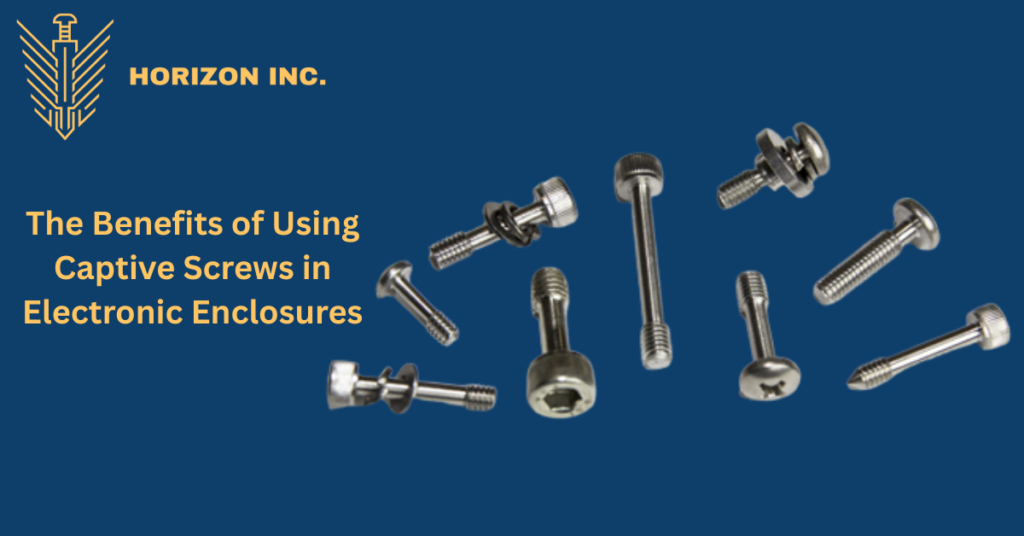
Captive screws are specialised fasteners designed to remain attached to a panel, cover, or enclosure even when fully loosened. They are widely used in electronic enclosures, control panels, telecom cabinets, server racks, medical equipment, and industrial machinery where frequent access is required. The primary benefit of captive screws is that they prevent hardware loss during maintenance and servicing. This reduces downtime, improves safety, protects sensitive electronic components from loose hardware, and simplifies reassembly. Captive screws also help manufacturers comply with industry requirements that mandate retained fasteners in critical equipment. For OEMs, panel builders, and enclosure manufacturers, captive screws improve reliability, serviceability, and overall user experience while reducing maintenance-related issues.
Key Takeaways
- Captive screws remain attached to the panel after loosening.
- They prevent lost screws during maintenance.
- Ideal for electronic enclosures, server racks, and telecom cabinets.
- Reduce risk of short circuits caused by loose hardware.
- Improve serviceability and maintenance efficiency.
- Available in Phillips, Allen, Torx, and thumb screw designs.
- Commonly used in data centres, industrial automation, and electrical panels.
- Suitable for stainless steel, steel, and aluminium enclosures.
Introduction
Electronic enclosures often require regular access for inspection, upgrades, repairs, and maintenance. In such environments, conventional screws can easily be misplaced, dropped into equipment, or lost entirely.
A single loose screw inside an electrical panel, telecom cabinet, or electronic assembly can result in equipment damage, electrical shorts, maintenance delays, and increased operational costs.
Captive screws solve this problem by remaining attached to the enclosure panel even after being fully unscrewed. As a result, they have become a preferred fastening solution for equipment manufacturers that prioritise reliability, safety, and ease of maintenance.
At Horizon Inc., we regularly supply captive screw solutions for electrical control panels, telecom infrastructure, data centre equipment, industrial automation systems, EV charging equipment, and sheet metal enclosures.
Why Are Captive Screws Used in Electronic Enclosures?
The primary purpose of a captive screw is to eliminate the possibility of hardware loss.
Unlike conventional screws, captive screws incorporate retaining features that prevent complete removal from the panel.
Benefits include:
- Faster maintenance operations
- Reduced risk of misplaced hardware
- Improved equipment reliability
- Enhanced operator safety
- Better long-term serviceability
For equipment that requires frequent access, these benefits can significantly reduce maintenance costs over the product lifecycle.
How Do Captive Screws Work?
A captive screw typically contains a reduced shank section, retaining washer, spring mechanism, or self-clinching retention feature.
When loosened:
- The screw disengages from the mating thread.
- The retaining mechanism prevents complete removal.
- The screw remains attached to the panel.
This ensures that the fastener is always available when the enclosure needs to be reassembled.
What Problems Do Captive Screws Prevent?
Electronic equipment contains numerous sensitive components that can be damaged by loose hardware.
Common issues prevented by captive screws include:
| Potential Problem | Impact |
|---|---|
| Lost screws during maintenance | Increased downtime |
| Loose hardware inside equipment | Electrical shorts |
| Missing panel fasteners | Reduced enclosure integrity |
| Incorrect replacement screws | Assembly errors |
| Delayed servicing | Increased maintenance costs |
In critical applications such as telecom equipment and data centre infrastructure, preventing these issues is often worth far more than the additional cost of captive fasteners.
Where Are Captive Screws Commonly Used?
Captive screws are used wherever equipment requires periodic access.
Common applications include:
- Electrical control panels
- Industrial enclosures
- Server racks
- Data centre cabinets
- Telecom shelters
- Outdoor communication cabinets
- Medical equipment
- Defence electronics
- Laboratory equipment
- Industrial automation systems
In data centre environments, captive screws are particularly valuable because dropped hardware can damage sensitive electronic components and create service disruptions.
What Types of Captive Screws Are Available?
Several captive screw configurations are available depending on the application.
| Type | Typical Application |
| Pan Head Captive Screws | Control panels and covers |
| Allen Captive Screws | Industrial equipment |
| Torx Captive Screws | Security-sensitive applications |
| Thumb Captive Screws | Tool-free maintenance |
| Self-Clinching Captive Screws | Thin sheet metal enclosures |
| Captive SEMS Screws | Grounding and electrical assemblies |
Selection depends on access frequency, torque requirements, security needs, and enclosure design.
How Do Captive Screws Compare with Standard Screws?
| Feature | Captive Screws | Standard Screws |
| Hardware retention | Yes | No |
| Risk of loss | Very low | High |
| Maintenance speed | Faster | Slower |
| Serviceability | Excellent | Moderate |
| Equipment safety | Higher | Lower |
| Initial cost | Higher | Lower |
While captive screws may have a slightly higher acquisition cost, they often deliver lower total lifecycle costs through improved maintenance efficiency.
How Do Captive Screws Improve Safety?
In electronic assemblies, a loose screw can create several hazards:
- Electrical short circuits
- Damage to printed circuit boards
- Equipment failures
- Grounding issues
- Foreign object contamination
Captive screws significantly reduce these risks by ensuring hardware remains attached to the enclosure throughout servicing operations.
How Should You Select the Right Captive Screw?
Selection criteria should include:
| Selection Factor | Recommendation |
| Enclosure Material | Steel, stainless steel, or aluminium compatible designs |
| Access Frequency | Thumb screws for frequent access |
| Security Requirement | Torx or tamper-resistant versions |
| Corrosion Exposure | Stainless steel A2 or A4 grades |
| Vibration Environment | Captive screws with locking features |
| Sheet Thickness | Self-clinching captive fasteners for thin sheet metal |
For outdoor telecom and infrastructure applications, stainless steel captive screws are generally preferred because of their corrosion resistance.
Common Installation Mistakes
Several installation errors can reduce the effectiveness of captive screws.
Incorrect Panel Thickness
Using a captive screw designed for a different panel thickness may compromise retention performance.
Over-Tightening
Excessive torque can damage threads or retaining components.
Selecting the Wrong Material
Using carbon steel fasteners in corrosive environments may lead to premature failure.
Ignoring Service Requirements
Some applications require tool-free access, making thumb captive screws a better choice than conventional drive styles.
Real-World Applications
Data Centre Server Cabinets
Captive screws simplify access to rack-mounted equipment while preventing dropped hardware inside server infrastructure.
Telecom Cabinets
Field technicians frequently open outdoor cabinets. Captive screws reduce the risk of losing hardware during maintenance visits.
Electrical Control Panels
Captive fasteners improve serviceability while maintaining enclosure integrity.
Industrial Automation Equipment
Captive screws help maintenance personnel quickly access internal components while ensuring fasteners remain available for reassembly.
FAQs
What is a captive screw?
A captive screw is a fastener designed to remain attached to a panel or cover after being loosened.
Why are captive screws used in electronic enclosures?
They prevent hardware loss, improve maintenance efficiency, and protect sensitive electronic components.
Are captive screws reusable?
Yes. Captive screws are designed for repeated assembly and disassembly cycles.
What materials are captive screws available in?
Common materials include zinc-plated steel, stainless steel 304, stainless steel 316, and aluminium-compatible variants.
Are captive screws required in certain industries?
Yes. Industries such as telecom, aerospace, defence, medical equipment, and electronics often specify captive fasteners for critical assemblies.
Can captive screws be used in thin sheet metal?
Yes. Self-clinching captive screw designs are specifically developed for thin sheet metal applications.
Conclusion
Captive screws are a simple but highly effective solution for improving the reliability and serviceability of electronic enclosures. By preventing hardware loss, reducing maintenance time, and protecting sensitive equipment, they help manufacturers build safer and more user-friendly products.
For OEMs, control panel manufacturers, telecom equipment builders, data centre contractors, and industrial enclosure fabricators, captive screws have become an increasingly important part of modern enclosure design.
At Horizon Inc., we supply captive screws, self-clinching fasteners, SEMS screws, machine screws, and enclosure fastening solutions used across electrical panels, telecom infrastructure, data centres, EV charging equipment, and industrial manufacturing throughout India.
Looking for captive screws for electronic enclosures, telecom cabinets, control panels, server racks, or industrial equipment? Horizon Inc. supplies captive fasteners engineered for reliability, serviceability, and long-term performance. Contact our team to identify the right captive screw solution for your application.
📞 Call: 080-41179152
📱 WhatsApp: +91 9916777262
✉️ Email: sales@horizonincindia.com
🌐 Visit: www.horizonincindia.com

Yusuf T. Unjhawala is Co-founder of Horizon Inc., a supplier of industrial fasteners serving electrical control panel manufacturers, sheet metal fabricators, telecom equipment manufacturers, solar industry, HVAC, and industrial OEMs across South India.
Public Policy and Research:
Yusuf is an Adjunct Scholar at the Takshashila Institution, Bengaluru, where his work focuses on defence, strategic affairs.