
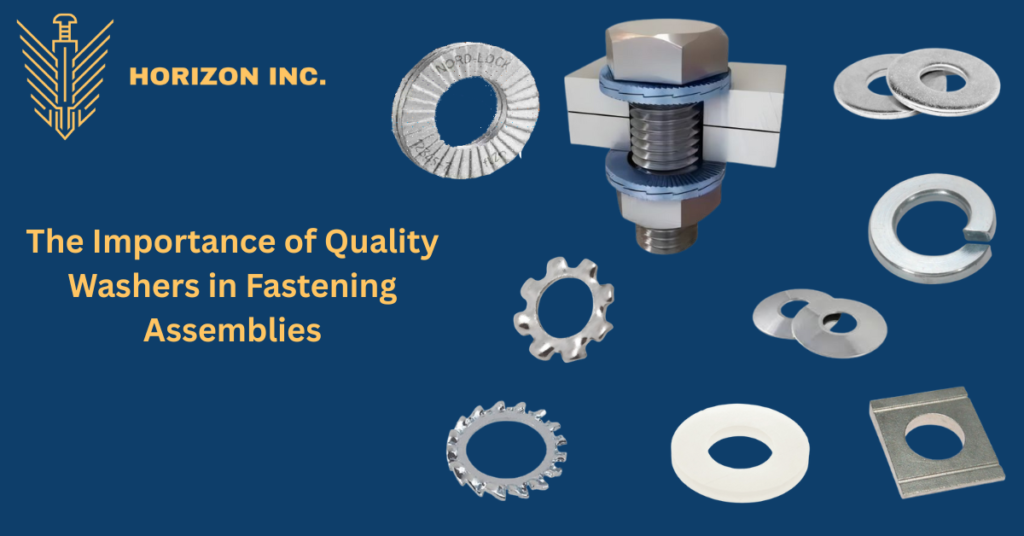
Washers are critical components in fastening assemblies because they distribute load, protect mating surfaces, maintain clamp force, reduce loosening, and improve overall joint reliability. While bolts, screws, and nuts often receive the most attention, the wrong washer can lead to surface damage, loss of preload, vibration-related loosening, corrosion issues, and premature assembly failure.
The correct washer depends on factors such as load, vibration levels, material thickness, environmental exposure, and electrical requirements. Common washer types include plain washers, spring washers, star washers, wave washers, taper washers, and nylon insulating washers. In industries such as electrical panels, telecom cabinets, solar structures, data centres, and sheet metal enclosures, selecting the right washer is often as important as selecting the fastener itself. Quality washers help ensure consistent performance, longer service life, and reduced maintenance costs.
Key Takeaways
- Washers distribute load and protect surfaces from damage.
- Quality washers help maintain joint integrity under vibration.
- Different washer types serve different engineering functions.
- Incorrect washer selection can cause assembly failures.
- Material compatibility is important for corrosion resistance.
- Electrical and electronic assemblies often require specialised washers.
- Washer quality affects fastener performance and service life.
Introduction
Many fastening failures are incorrectly attributed to screws, bolts, or nuts when the actual problem originates from an unsuitable washer. A washer may appear to be a simple component, but it plays a major role in maintaining preload, protecting surfaces, reducing vibration-related loosening, and improving assembly reliability.
For industries such as sheet metal fabrication, electrical enclosures, telecom infrastructure, solar mounting systems, and industrial equipment manufacturing, washer selection should be treated as an engineering decision rather than an afterthought.
What Does a Washer Do in a Fastening Assembly?
A washer is a component placed between the fastener and the mating surface.
Its primary functions include:
- Distributing clamping loads
- Preventing surface deformation
- Reducing wear and galling
- Maintaining preload
- Improving vibration resistance
- Providing electrical insulation when required
- Compensating for dimensional variations
Without a washer, concentrated loads may damage softer materials such as aluminium, painted sheet metal, plastics, composites, and thin-gauge steel.
Why Is Washer Quality Important?
Low-quality washers frequently suffer from:
- Incorrect thickness
- Poor flatness
- Inconsistent hardness
- Burrs and sharp edges
- Inferior coating quality
- Corrosion issues
These defects can lead to:
- Loss of clamp load
- Surface damage
- Joint loosening
- Water ingress
- Electrical grounding problems
- Reduced service life
In outdoor installations such as telecom towers, solar structures, and rooftop assemblies, poor-quality washers can become a major source of maintenance issues.
What Are the Different Types of Washers?
| Washer Type | Primary Function | Typical Applications |
|---|---|---|
| Plain Washer | Load distribution | General fastening |
| Spring Washer | Maintains tension | Machinery and vibration-prone assemblies |
| Star Washer | Locking and grounding | Electrical panels and enclosures |
| Belleville Washer | High preload in limited space | Heavy equipment |
| Wave Washer | Spring action and compensation | Precision assemblies |
| Taper Washer | Corrects angled surfaces | Structural steelwork |
| Nylon Washer | Electrical insulation | Electronics and electrical equipment |
| Bonded EPDM Washer | Sealing and waterproofing | Roofing and cladding screws |
| Wedge locking washer like Nord-Lock | Maintains preload, prevent bolt loosening | Machinery and dynamic and vibration-prone assemblies |
Which Washer Type Should You Select?
| Application Requirement | Recommended Washer |
| General load distribution | Plain Washer |
| Vibration resistance | Spring Washer |
| Electrical grounding | Star Washer |
| Waterproof sealing | Bonded EPDM Washer |
| Electrical insulation | Nylon Washer |
| High preload requirements | Belleville Washer |
| Angled structural surfaces | Taper Washer |
| Thermal expansion compensation | Wave Washer |
| High vibration and dynamic load | Wedge locking washer |
How Do Washers Improve Reliability in Sheet Metal Assemblies?
Sheet metal assemblies often use materials ranging from 0.8 mm to 3 mm thick.
In these applications, washers:
- Prevent deformation around mounting holes
- Distribute clamping force across larger areas
- Reduce paint damage
- Improve vibration resistance
- Extend assembly life
At Horizon Inc., we frequently observe that thin sheet metal panels experience distortion when fasteners are installed without appropriate washers, particularly in electrical enclosures and telecom cabinets.
Why Are Quality Washers Important in Electrical Panels and Enclosures?
Electrical panel manufacturers often require:
- Reliable grounding
- Vibration resistance
- Protection of powder-coated surfaces
- Long-term corrosion resistance
Star washers are commonly used where grounding continuity is required because their teeth penetrate coatings and improve electrical contact.
Nylon washers may be used where electrical isolation is necessary.
Poor-quality washers can compromise grounding performance and lead to inconsistent electrical connections.
What Common Failures Occur Due to Incorrect Washer Selection?
Surface Deformation
Thin materials become damaged due to concentrated clamping loads.
Fastener Loosening
Insufficient preload retention can allow vibration-induced loosening.
Corrosion Problems
Incorrect material combinations may accelerate galvanic corrosion.
Water Leakage
Poor-quality sealing washers can fail, allowing moisture ingress.
Electrical Issues
Improper grounding or insulation may result from unsuitable washer selection.
What Materials Are Commonly Used for Washers?
| Material | Characteristics | Typical Use |
| Carbon Steel | Economical and strong | General industrial use |
| Stainless Steel 304 | Corrosion resistant | Indoor and outdoor applications |
| Stainless Steel 316 | Superior corrosion resistance | Marine and coastal environments |
| Brass | Conductive and corrosion resistant | Electrical applications |
| Nylon | Non-conductive and lightweight | Electrical insulation |
| Spring Steel | High elasticity | Locking and preload applications |
Which Standards Apply to Washers?
Common standards include:
- DIN 125 / ISO 7089 – Plain Washers
- DIN 127 – Spring Washers
- DIN 137 – Wave Washers
- DIN 6797 – Star Washers
- DIN 434 – Taper Washers
Engineers should verify dimensional and material requirements against applicable project specifications.
Real-World Applications of Quality Washers
Electrical Control Panels
Used to protect powder-coated surfaces and maintain electrical connections.
Telecom Cabinets
Provide vibration resistance and corrosion protection.
Solar Mounting Structures
Assist in maintaining joint integrity under thermal cycling and weather exposure.
Data Centre Infrastructure
Support reliable fastening of racks, cable management systems, and enclosure components.
Industrial Machinery
Help maintain preload and reduce maintenance requirements.
Frequently Asked Questions
Are washers always necessary?
Not always, but they are highly recommended in most industrial fastening applications where load distribution, vibration resistance, or surface protection is required.
Which washer is best for vibration resistance?
Spring washers, star washers, and Belleville washers are commonly used depending on the application requirements.
Can stainless steel washers be used with stainless steel fasteners?
Yes. This is generally preferred for corrosion resistance and material compatibility.
What washer should be used with self-drilling screws?
Bonded EPDM washers are commonly used in roofing and cladding applications where sealing is required.
Do washers improve fastener life?
Yes. Proper washers reduce surface damage, maintain preload, and minimise loosening, which improves overall assembly durability.
Are nylon washers suitable for structural applications?
No. Nylon washers are generally used for insulation and light-duty applications rather than structural load-bearing connections.
Conclusion
Washers may be small components, but they have a significant impact on the reliability and longevity of fastening assemblies. Selecting the correct washer type, material, and quality level can prevent loosening, minimise surface damage, improve corrosion resistance, and reduce maintenance costs.
For electrical panels, telecom infrastructure, sheet metal enclosures, solar installations, and industrial equipment, washer selection should be treated as a critical engineering decision rather than a simple accessory choice.
Looking for reliable washers for electrical panels, sheet metal fabrication, telecom infrastructure, solar installations, and industrial manufacturing? Horizon Inc. supplies a comprehensive range of plain washers, spring washers, star washers, wave washers, taper washers, nylon washers, and specialty washers designed to improve fastening reliability and assembly performance. Contact our team to discuss your application requirements and select the right washer solution for your project.
📞 Call: 080-41179152
📱 WhatsApp: +91 9916777262
✉️ Email: sales@horizonincindia.com
🌐 Visit: www.horizonincindia.com

Yusuf T. Unjhawala is Co-founder of Horizon Inc., a supplier of industrial fasteners serving electrical control panel manufacturers, sheet metal fabricators, telecom equipment manufacturers, solar industry, HVAC, and industrial OEMs across South India.
Public Policy and Research:
Yusuf is an Adjunct Scholar at the Takshashila Institution, Bengaluru, where his work focuses on defence, strategic affairs.