
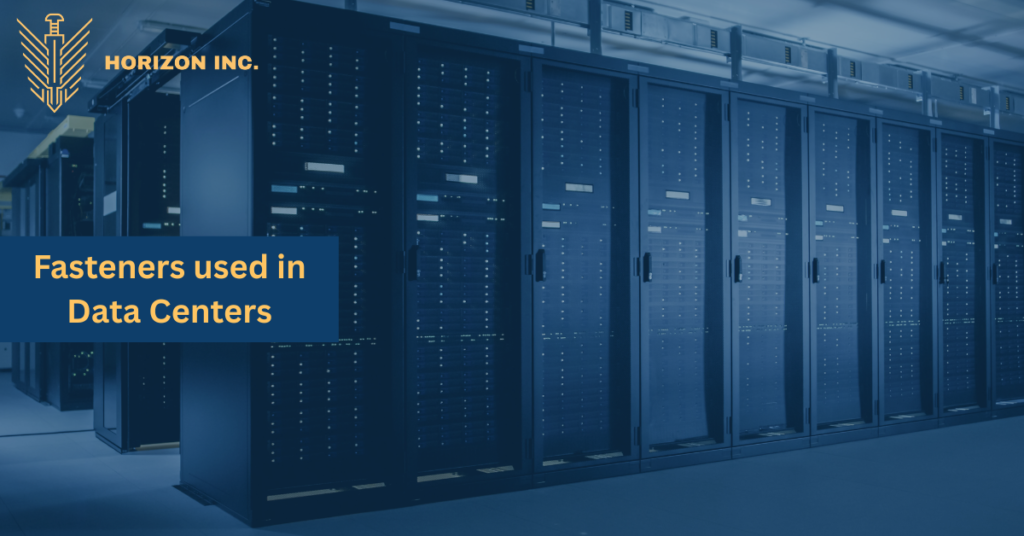
Data centres rely on specialised fasteners to ensure structural integrity, serviceability, electrical grounding, vibration resistance and long-term reliability. Common fasteners used in data centres include self-clinching nuts and studs, captive screws, cage nuts, rivet nuts, blind rivets, machine screws, weld studs, spacers, standoffs and structural fastening systems. These fasteners are used throughout server racks, cooling systems, cable management systems, electrical distribution equipment, battery storage units and enclosure assemblies.
As AI workloads increase rack densities and cooling requirements, fastening systems have become increasingly important. Proper fastener selection helps maintain equipment alignment, improve service access, support grounding requirements, reduce vibration-related failures and simplify maintenance. For manufacturers and contractors building data centre infrastructure, selecting the correct fastener can directly influence uptime, safety and lifecycle costs.
Key Takeaways
- Fasteners affect reliability, uptime and maintainability in data centres.
- Self-clinching fasteners are widely used in server chassis and enclosures.
- Cage nuts remain the standard mounting solution for 19-inch server racks.
- Captive screws prevent loose hardware during maintenance.
- Rivet nuts provide strong threads in thin sheet metal structures.
- Structural fasteners support cable trays, cooling systems and equipment frames.
- Stainless steel and corrosion-resistant coatings are often required in cooling and external environments.
- Fastener selection should consider vibration, grounding, corrosion and future serviceability.
Introduction
Modern data centres are among the most demanding infrastructure projects being built today. They contain thousands of interconnected components operating continuously, often with uptime requirements exceeding 99.99%.
While servers, cooling systems and power distribution equipment receive most of the attention, the performance of these systems depends heavily on seemingly simple components: fasteners.
Every server rack, cooling assembly, cable tray, electrical enclosure and battery storage cabinet relies on correctly selected fasteners to maintain mechanical integrity and ensure long-term reliability.
For data centre manufacturers, EPC contractors, panel builders and infrastructure providers, understanding fastener selection is essential.
What Types of Fasteners Are Used in Data Centres?
| Fastener Type | Primary Application | Key Benefit |
|---|---|---|
| Self-Clinching Nuts | Server chassis and enclosures | Strong reusable threads in thin sheet metal |
| Self-Clinching Studs | Grounding points and component mounting | Permanent mounting points |
| Captive Screws | Access panels and covers | Prevent hardware loss |
| Cage Nuts | Server racks | Flexible rack mounting |
| Rivet Nuts | Rack frames and cable systems | Blind installation capability |
| Blind Rivets | Structural sheet metal assembly | Fast permanent joints |
| Machine Screws | Equipment assembly | Precise fastening |
| Weld Studs | Grounding and mounting | Strong permanent attachment |
| Spacers and Standoffs | PCB and electrical assemblies | Controlled spacing |
| Structural Bolts | Infrastructure support systems | High load capacity |
Why Are Self-Clinching Fasteners Widely Used in Data Centres?
Self-clinching fasteners create strong threads in thin sheet metal without welding.
Typical applications include:
- Server chassis
- Network cabinets
- Switchgear enclosures
- Battery storage cabinets
- Cooling equipment panels
Benefits include:
- Flush installation
- High pull-out resistance
- Reusable threads
- Reduced assembly time
- Improved appearance
In high-density server environments where space is limited, self-clinching fasteners provide reliable fastening without protrusions that can interfere with airflow.
Common Self-Clinching Fasteners
- Self-Clinching Nuts
- Self-Clinching Studs
- Self-Clinching Standoffs
- Floating Nuts
- Captive Panel Fasteners
Why Are Cage Nuts Essential for Server Racks?
Most data centres use standard 19-inch racks.
Cage nuts allow equipment to be mounted securely while maintaining flexibility for future upgrades.
Advantages include:
- Accommodate minor alignment variations
- Easy replacement if threads become damaged
- Suitable for multiple equipment types
- Support frequent equipment changes
This flexibility makes cage nuts one of the most commonly used fasteners in server rack installations.
Why Are Captive Screws Important in Data Centres?
A dropped screw inside a live server environment can create serious operational risks.
Captive screws remain attached to the panel even when loosened.
Benefits include:
- Prevent lost hardware
- Faster servicing
- Reduced maintenance errors
- Improved equipment safety
Captive screws are commonly used on:
- Server covers
- Rack doors
- Electrical access panels
- Network equipment enclosures
They have become increasingly important as data centre equipment densities continue to increase.
Which Fasteners Are Used in Data Centre Cooling Systems?
Cooling infrastructure often represents 30–40% of a data centre’s physical equipment investment.
Typical fastening applications include:
- CRAC units
- CRAH units
- Chillers
- Cooling distribution units
- Fan assemblies
- Liquid cooling systems
Common fasteners include:
- Structural blind rivets
- Rivet nuts
- Self-drilling screws
- Machine screws
- Weld studs
- Lock nuts
- Spring washers
Fasteners in cooling systems must withstand:
- Vibration
- Thermal cycling
- Condensation
- Maintenance access requirements
Special attention should be paid to corrosion resistance near cooling equipment. Stainless steel A2 and A4 grades are commonly specified in such environments.
What Fasteners Are Used in Data Centre Electrical Infrastructure?
Data centres contain extensive electrical infrastructure including:
- Switchboards
- Busbar systems
- UPS cabinets
- Battery systems
- Power distribution units
- Generator controls
Common fastening solutions include:
- Weld studs
- Self-clinching studs
- Machine screws
- Captive screws
- Brass spacers
- Rivet nuts
Electrical continuity and grounding requirements often influence fastener selection.
How Do Fasteners Support Cable Management Systems?
Cable management is critical for airflow, maintenance and scalability.
Fasteners are used in:
- Cable trays
- Ladder racks
- Fibre routing systems
- Conduit supports
- Overhead support structures
Common products include:
- Threaded rods
- Rivet nuts
- U-bolts
- Structural bolts
- Spring channel fasteners
Proper fastening ensures cable systems remain secure while accommodating future expansion.
Which Materials Are Best for Data Centre Fasteners?
| Material | Typical Application | Advantages |
| Carbon Steel Zinc Plated | Indoor racks and enclosures | Economical |
| Stainless Steel 304 | Cooling systems and humid environments | Corrosion resistance |
| Stainless Steel 316 | Coastal or aggressive environments | Superior corrosion resistance |
| Aluminium | Lightweight assemblies | Reduced weight |
| Brass | Electrical applications | Conductivity |
Material selection should consider:
- Corrosion exposure
- Grounding requirements
- Thermal expansion
- Maintenance frequency
- Expected service life
Common Fastener Failures in Data Centres
Based on industry experience, common issues include:
| Failure Mode | Cause | Prevention |
| Thread stripping | Over-torque | Controlled installation torque |
| Vibration loosening | Dynamic loads | Locking washers or lock nuts |
| Corrosion | Poor material selection | Stainless steel or coated fasteners |
| Misalignment | Incorrect hole placement | Floating nuts and cage nuts |
| Lost hardware | Non-captive designs | Captive fasteners |
How Does Horizon Inc Support Data Centre Manufacturers?
Horizon Inc supplies fastening solutions used by manufacturers producing:
- Server racks
- Electrical enclosures
- Cooling equipment
- Telecom cabinets
- Network infrastructure
- Battery energy storage systems
Our range includes:
- Self-Clinching Fasteners
- Captive Screws
- Cage Nuts
- Rivet Nuts
- Blind Rivets
- Structural Rivets
- Weld Studs
- Industrial Fasteners
- Spacers and Standoffs
From thin-sheet server chassis to heavy-duty infrastructure assemblies, selecting the correct fastener helps improve reliability, serviceability and long-term performance.
Frequently Asked Questions
What are the most common fasteners used in data centres?
Self-clinching fasteners, cage nuts, captive screws, rivet nuts, blind rivets and machine screws are among the most commonly used fasteners.
Why are cage nuts used in server racks?
They provide flexible mounting, accommodate alignment variations and can be easily replaced if damaged.
Are stainless steel fasteners necessary in data centres?
They are recommended in cooling systems, humid areas and external infrastructure where corrosion resistance is important.
What is the benefit of captive screws?
Captive screws prevent hardware loss during maintenance and improve service efficiency.
Why are self-clinching fasteners preferred in server chassis?
They create strong reusable threads in thin sheet metal while maintaining a flush surface.
Can rivet nuts be used in server racks?
Yes. Rivet nuts are commonly used where access is available from only one side of the assembly.
Conclusion
Data centres demand fastening systems that deliver reliability, serviceability and long-term performance. From self-clinching fasteners in server chassis to cage nuts in racks and rivet nuts in cooling equipment, every fastening decision contributes to overall uptime and infrastructure reliability.
As data centres continue to evolve to support AI, cloud computing and high-density computing environments, selecting the correct fastener becomes increasingly important for manufacturers, contractors and operators alike.
Designing or manufacturing equipment for data centres?
Horizon Inc supplies self-clinching fasteners, captive screws, cage nuts, rivet nuts, blind rivets, weld studs and industrial fastening solutions used across server racks, electrical enclosures, cooling systems and infrastructure projects.
Contact our team to discuss fastening solutions for your next data centre project.
📞 +91 9916777262
📧 sales@horizonincindia.com
🌐 www.horizonincindia.com

Yusuf T. Unjhawala is Co-founder of Horizon Inc., a supplier of industrial fasteners serving electrical control panel manufacturers, sheet metal fabricators, telecom equipment manufacturers, solar industry, HVAC, and industrial OEMs across South India.
Public Policy and Research:
Yusuf is an Adjunct Scholar at the Takshashila Institution, Bengaluru, where his work focuses on defence, strategic affairs.